
thermtrol TC100-PN circuit protection
Description
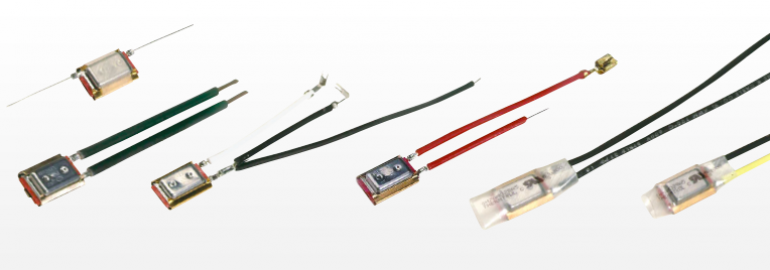
Thermtrol’s innovative Self-Hold 7AM thermal protector combines the protection of a Klixon® 7AM with a self-holding feature. Designed to prevent overheating in mo- tors, the Self-Hold 7AM offers the best attributes of one shot protectors and auto reset protectors in a single package. The Self-Hold 7AM, once activated in a fault condition, maintains its open state until power is removed. No reset button here-simply remove power and the device will cool and reset. This inherent design feature adds an extra level of security over automatic reset devices of any type. It is the reliable, cost effective solution for numerous applications.
Details & Specifications
Type A, Radial Lead ConfigurationsHere's How it Functions
Developed by Thermtrol, the Self-Hold 7AM is a Thermal Protector/PTC Heater combination. The PTC Heater is electrically located across the contacts of the protector.
When the protector contacts are open, the heater is in series with the load. The heater then maintains the temperature sensitive bimetal of the protector in an open state.
To reset the Self-Hold 7AM, power must be removed for sufficient time to allow the Self-Hold 7AM to cool to below the protector’s reset point.
Bi-metal Options
Self-Hold 7AM performance is dependent upon the applied current as well as temperature. Differenct Bi-metals are incorporated to achieve various performance characteristics. In applications where temperature rise is less than 2°C per second, use low-resistance ratings. High-resistance Bi-Metal is recommended for applications with 2°- 5°C per second rates of temperature rise. Contact Thermtrol for additional application consideration if the rate of temperature rise exceeds 5°C per second. Use these curves to determine which Bi-Metal may trip in the manner required for your application.
Thermtrol is the expert in custom wire harness and plastic injection insert/overmolding. With customers in commercial vehicle manufacturing, automotive supply, industrial equipment, agricultural equipment and sensors and controls.
Flexible manufacturing facilities with the ability to handle both high production programs and short run orders.
Quick turn-around time on our USA-based short run lines to fulfill prototype, samples to support program development and production launches.
Engineering support through all phases of design and engineering.
Introduction to Wire Harnesses
Wire Harness Basics
A wire harness or cable assembly is an assembly of wires or cables that transmits signals or electrical power.
The wire or cable is frequently bound together with wire ties, lacing, sleeves, tape conduit or a number of other options including a combination of the above.
A harness provides advantages over loose wires and cables by offering decreased installation time and allows for standardization.
Wires often have terminals attached which can then be assembled into keyed housings for error proofing and connection to other parts of the final assembly.
Harness assembly is typically done manually due to the many different processes involved.
Refer to Thermtrol wire harness design guidelines for more information.
Wire harness design is often overlooked in the product development.
This can result in incomplete drawings and obstacles in the manufacturing process.
Early partnership with Thermtrol can help guide the design by avoiding many last minute changes.
OEM Tooling and material lead times can be very long – advanced planning is important.
Harnessing can be broken down into several areas:
Leaded wire
Frequently used in point to point wiring
Typically made on automated equipment
Low complexity
Minimal labor
Good quality
Additional savings opportunities for customer with bundling the leads into a harness